

Happy Friday everyone, our new Verified Voter Omnibus is out this week! For today’s findings, we are going to look into all the ways American voters are worried about AI, thinking about AI, and list AI as their top issue. Let us begin by revisiting a survey question from March.
1. Voters are now more concerned about AI becoming too powerful than job losses
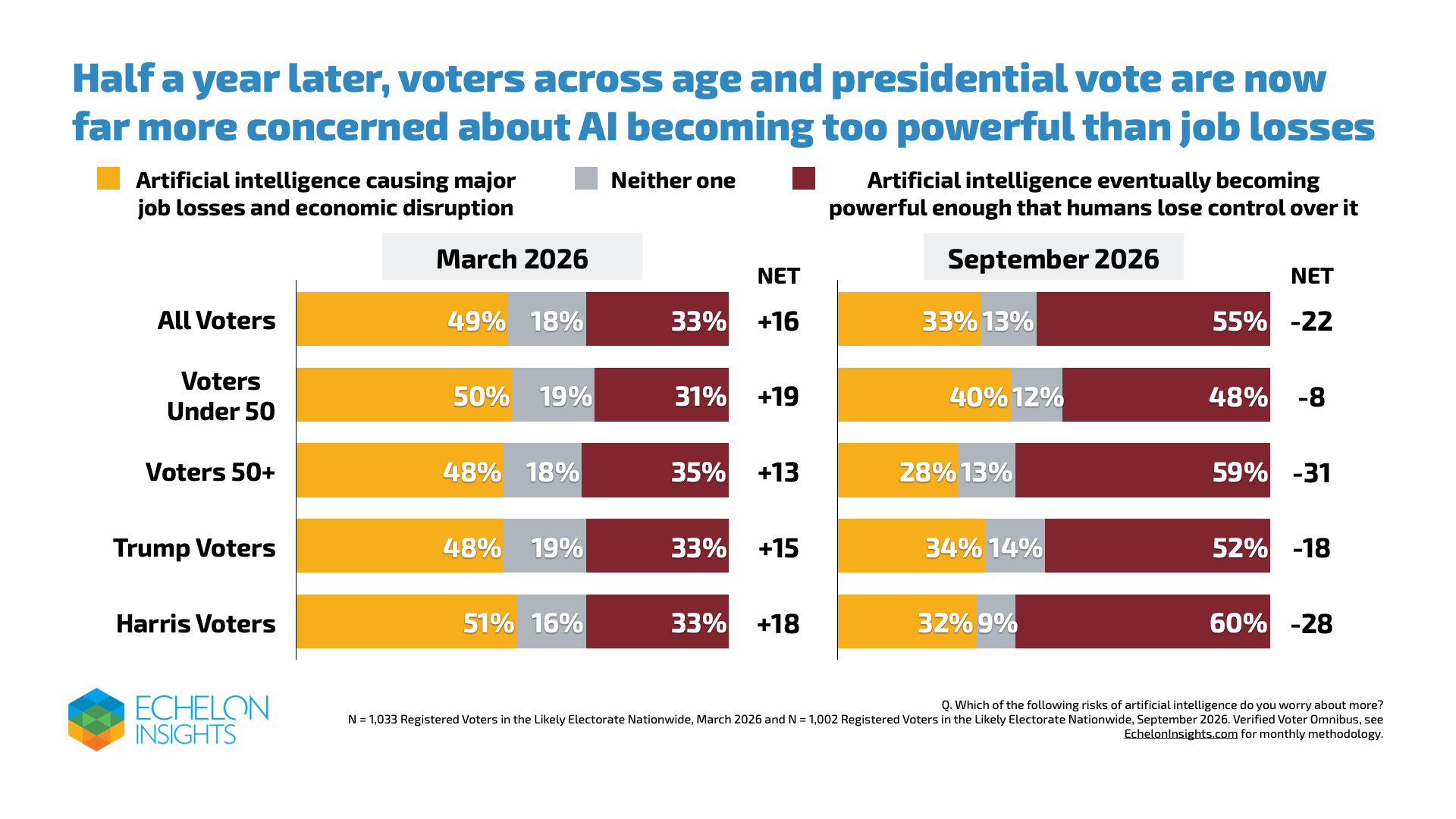
Last March, we asked voters to choose between two negative predictions for AI and say which they worry about more. The first was widespread job losses and economic disruption, the second was AI becoming too powerful for humans to control. We asked the same question now, six months later. Across the board for both age and presidential vote, the American electorate is now significantly more concerned about AI becoming so powerful that humans lose control over it. The weakest swing was among younger voters, but even a plurality of them picked this darker worry.
2. American voters are not very trusting of AI company CEOs right now
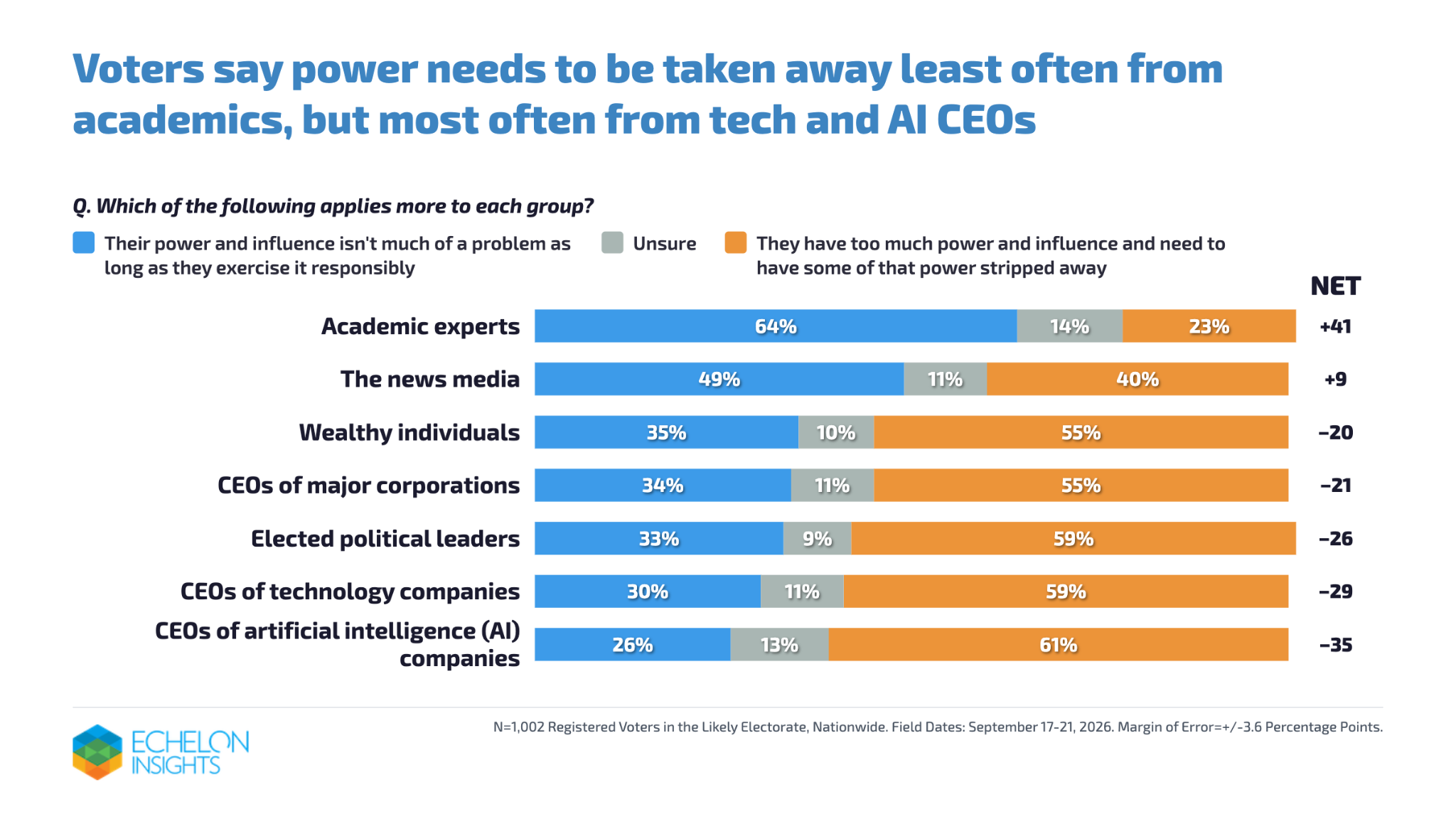
We also asked voters about seven different influential groups with a statement test; do they think a group’s power and influence is reasonable so long as they are responsible, or do they think the group has too much power right now? The most favorable read was for academic experts and then the news media; on the net, voters are more open to them having the current power they wield. AI CEOs are at the very bottom, with less leeway than regular CEOs of major corporations or wealthy individuals.
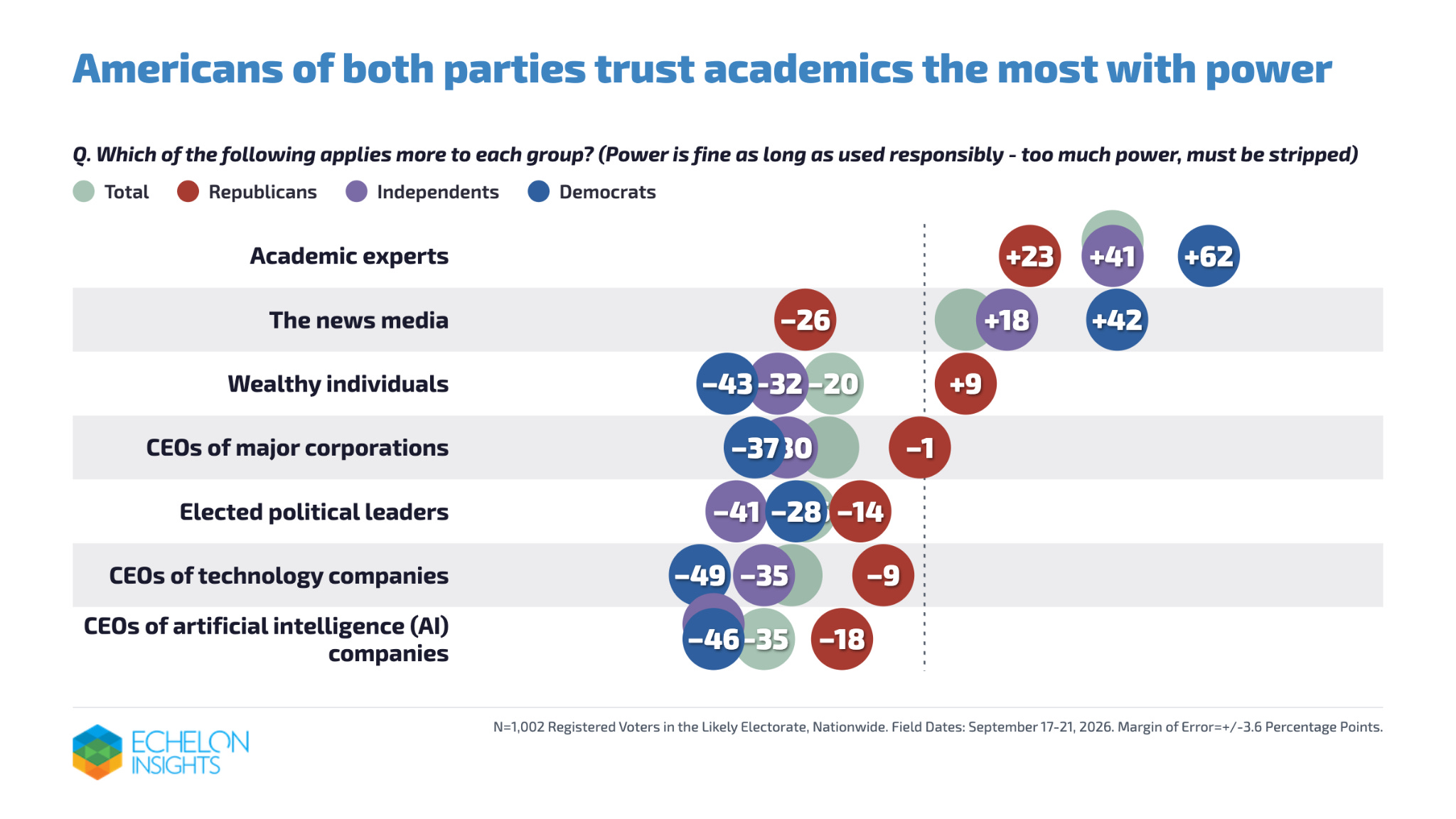
In fact, even Republican voters selected the more generous statement for academic experts on net than for any other group! By contrast, they flip to the very opposite for the news media, saying by a 26-point margin that it has too much power and needs some of it taken away. Democrats essentially exaggerated both ends of the general pattern; they are very open to academics and the news media holding their current power, and are very convinced that tech and AI executives have too much.
3. What other things do voters think AI is going to do?
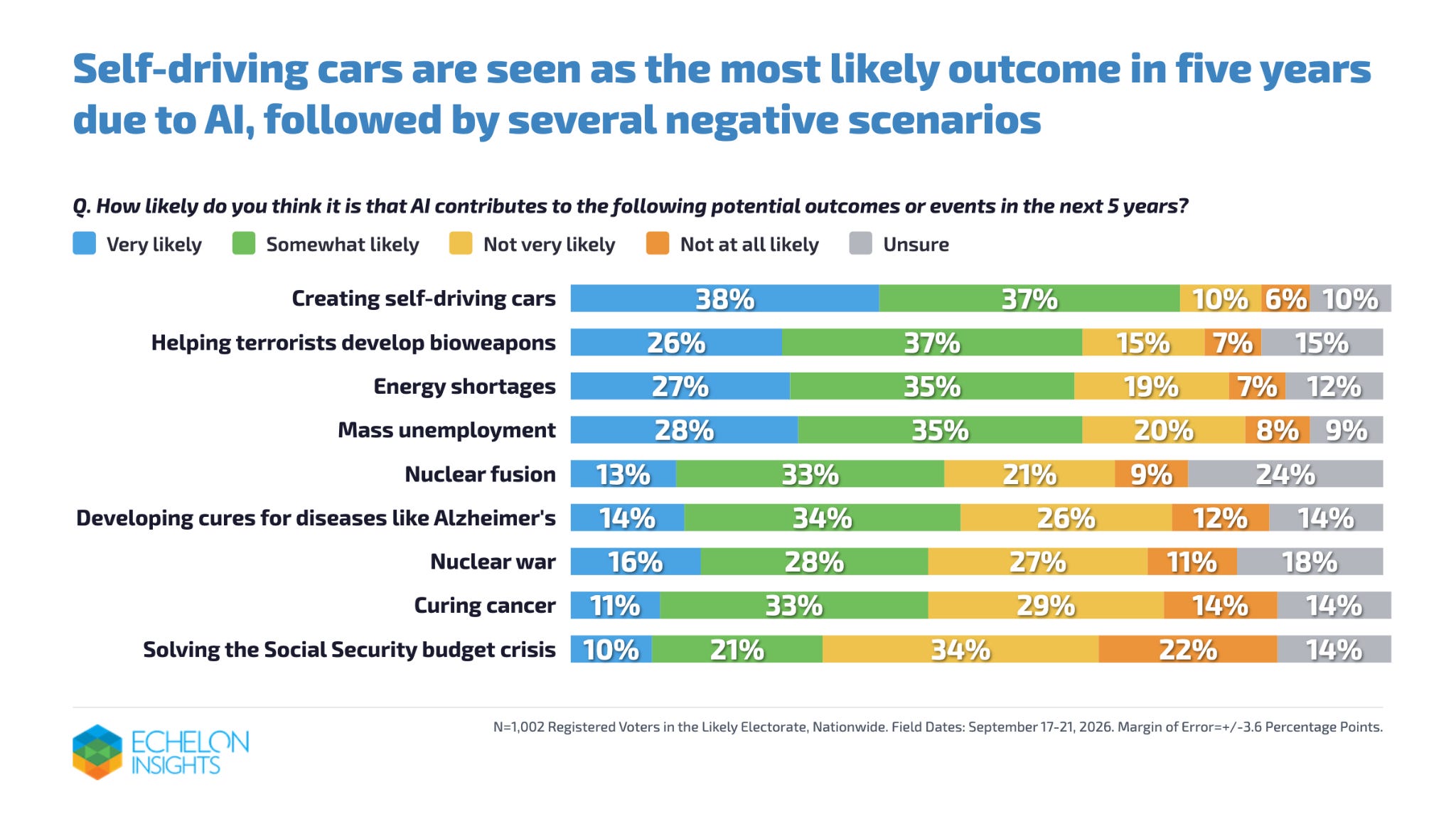
Another way of looking at voter perceptions of AI is what they think it will do, more broadly than a bad and really bad option. A majority say it is likely that AI will contribute to creating self-driving cars in the next five years. So far so good. But slightly smaller majority also say it is likely to contribute to bioweapon development, energy shortages, and mass unemployment. Not great! Below this tier, voters rate most of the other positive outcomes we tested (but also curiously, nuclear war) at significantly lower likelihood. They are most skeptical that AI would help solve the fiscal math of Social Security. There was not much of a partisan difference for these estimations with one clear exception. 20% of Republicans and 25% of independents told us it is very likely that AI contributes to mass unemployment. A far higher 38% of Democrats said the same.
4. Vast majorities of voters are concerned about AI delivering bad info and taking jobs
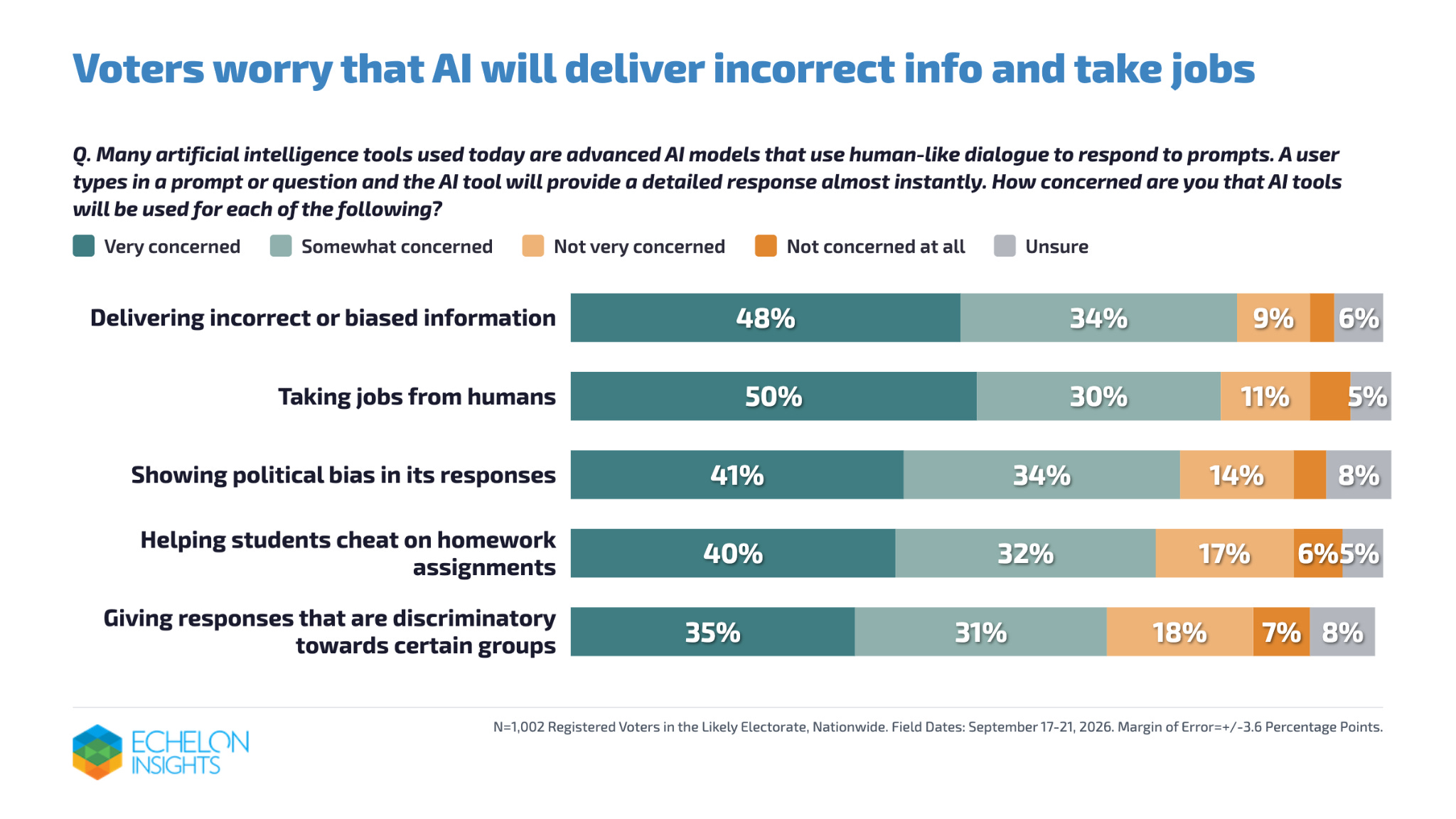
Voters told us how concerned they are about various negative uses from AI tools. AI taking jobs and giving incorrect info saw the highest intensity of concern. Interestingly, helping students cheat on homework or giving discriminatory responses were of somewhat less concern, although still high. Right in the middle is political bias. The only significant partisan difference? 29% of Republicans said they are very concerned about AI tools giving discriminatory responses, compared to 42% of Democrats.
5. All voters say they want AI development slowed, especially older Democrats
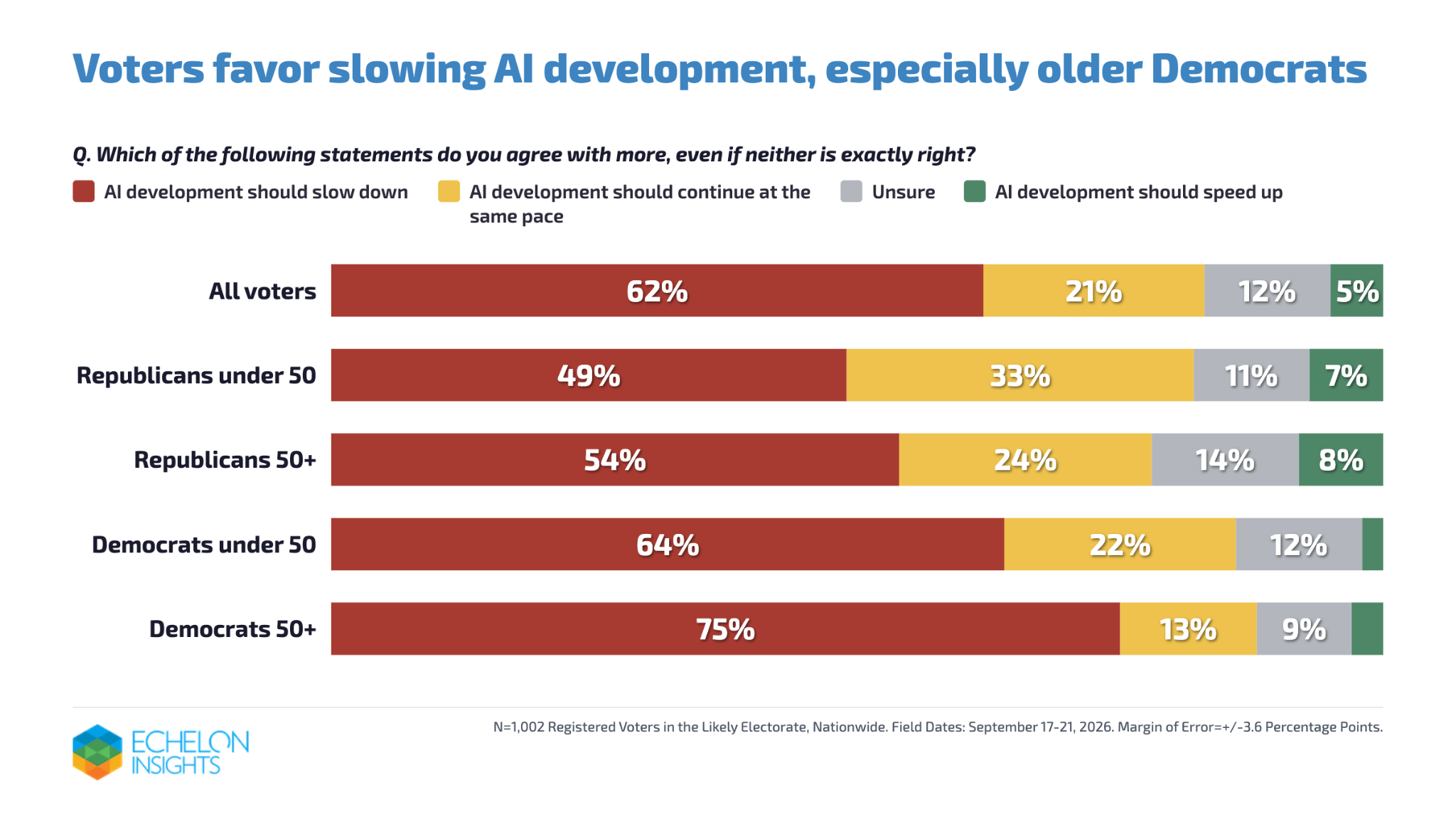
We found a larger partisan difference on the pace of AI development than questions about AI’s potential outcomes or risk. While a strong majority of voters say AI development should slow down, this sentiment rises to 3 in 4 among Democrats ages 50 and up. By contrast, Republicans favor slowing AI by the smallest majority, with just under half of Republicans under 50 saying it should slow, and another third saying it should continue at the same pace.
6. AI is still far down the list of issues that voters say matter the most
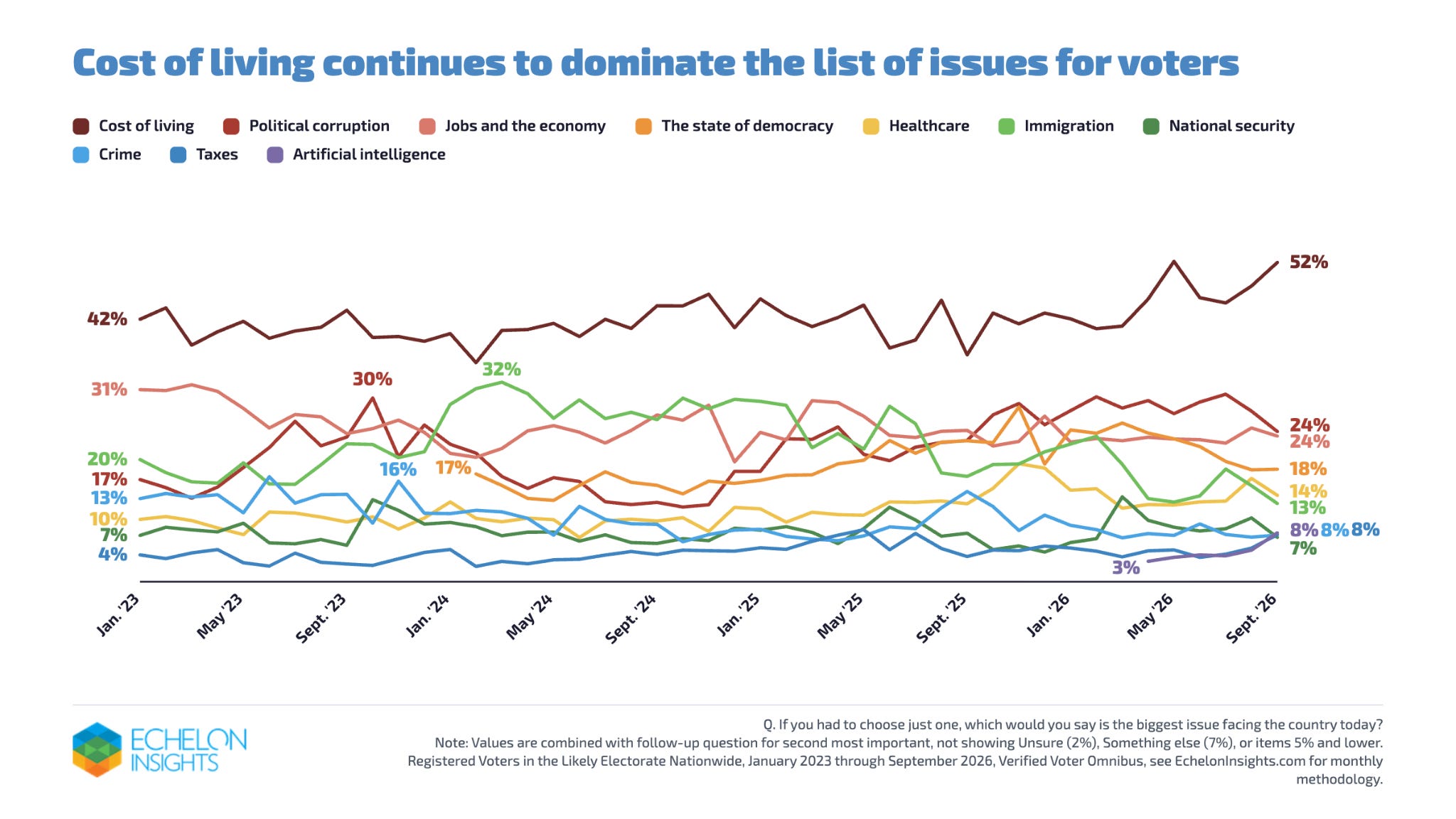
We told you last week that there would be a bump in listing AI as the first or second issue in politics. We were right. Instead of 5%, AI is now at 8% of voters. This might suggest that as the midterm elections develop in this final month, voters will hear politicians list AI in relation to topics of living costs and corruption, far more than the abstract nature of the technology itself. We’ll see you next week.