
Friday Findings #1
Welcome to The Echelon Review!

Welcome to the first edition of the Echelon Insights newsletter!
In this Friday newsletter, we’ll go over important findings in public opinion research and our own data at Echelon Insights. Let’s dive in!
1. Are Republican voters Trump-first or Party-first?
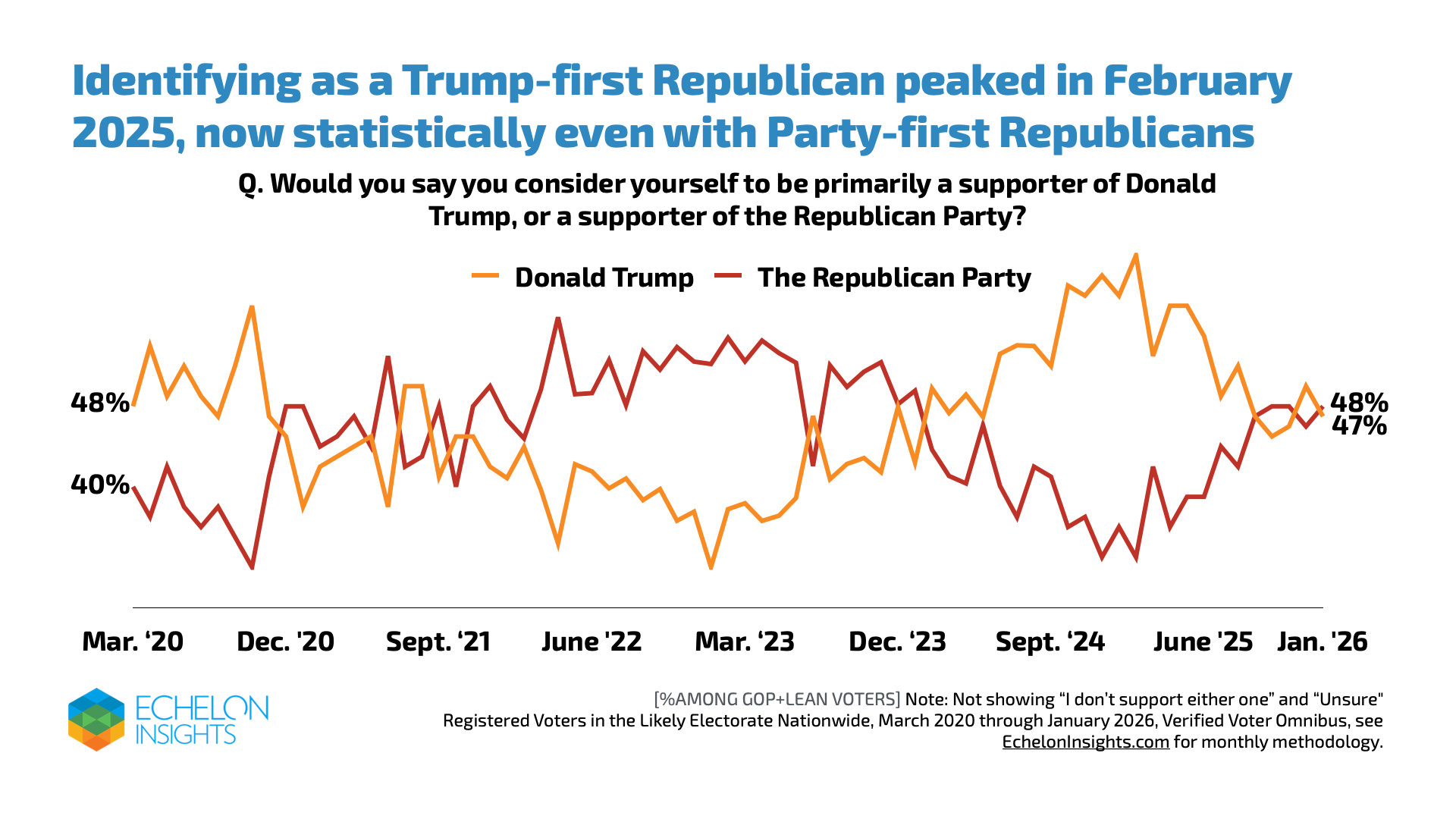
For almost six years, we’ve been tracking if Republican voters identify primarily as supporters of Donald Trump or supporters of the Republican party. For the last five months, they’ve reached a statistical tie. But a year ago in our February 2025 voter omnibus, identification with Trump peaked at the highest point ever (63%).
2. Cable news following (mostly) hasn’t changed
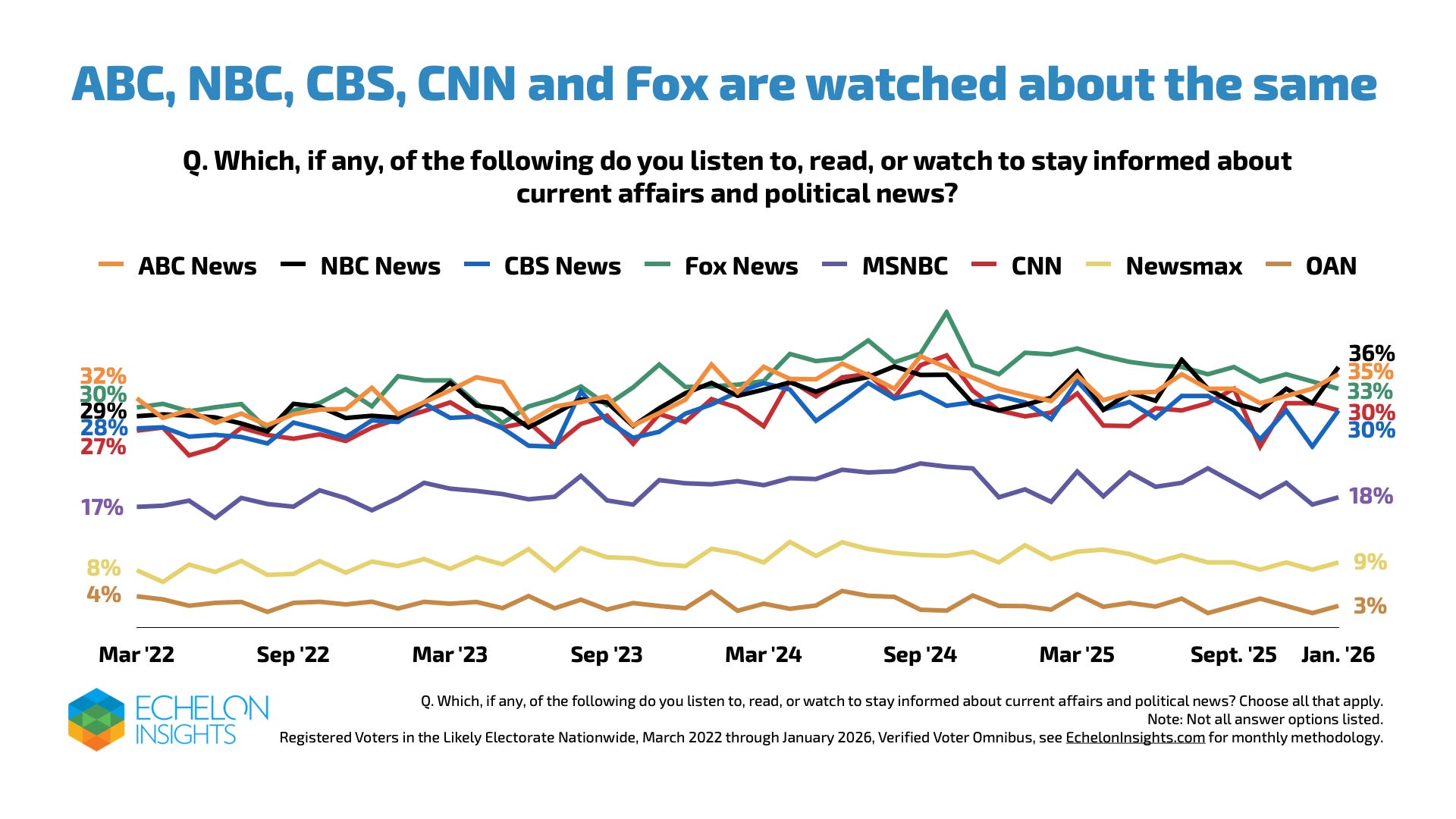
If Trump identification with Republican voters is a bit of a wild ride, news consumption is the opposite. Going back to March 2022, our voter omnibus holds a pretty steady trend. Only NBC News has broken above historic trends in our latest findings, at 36% of voters following it to stay informed versus 29% almost three years ago.
3. Super Bowl findings
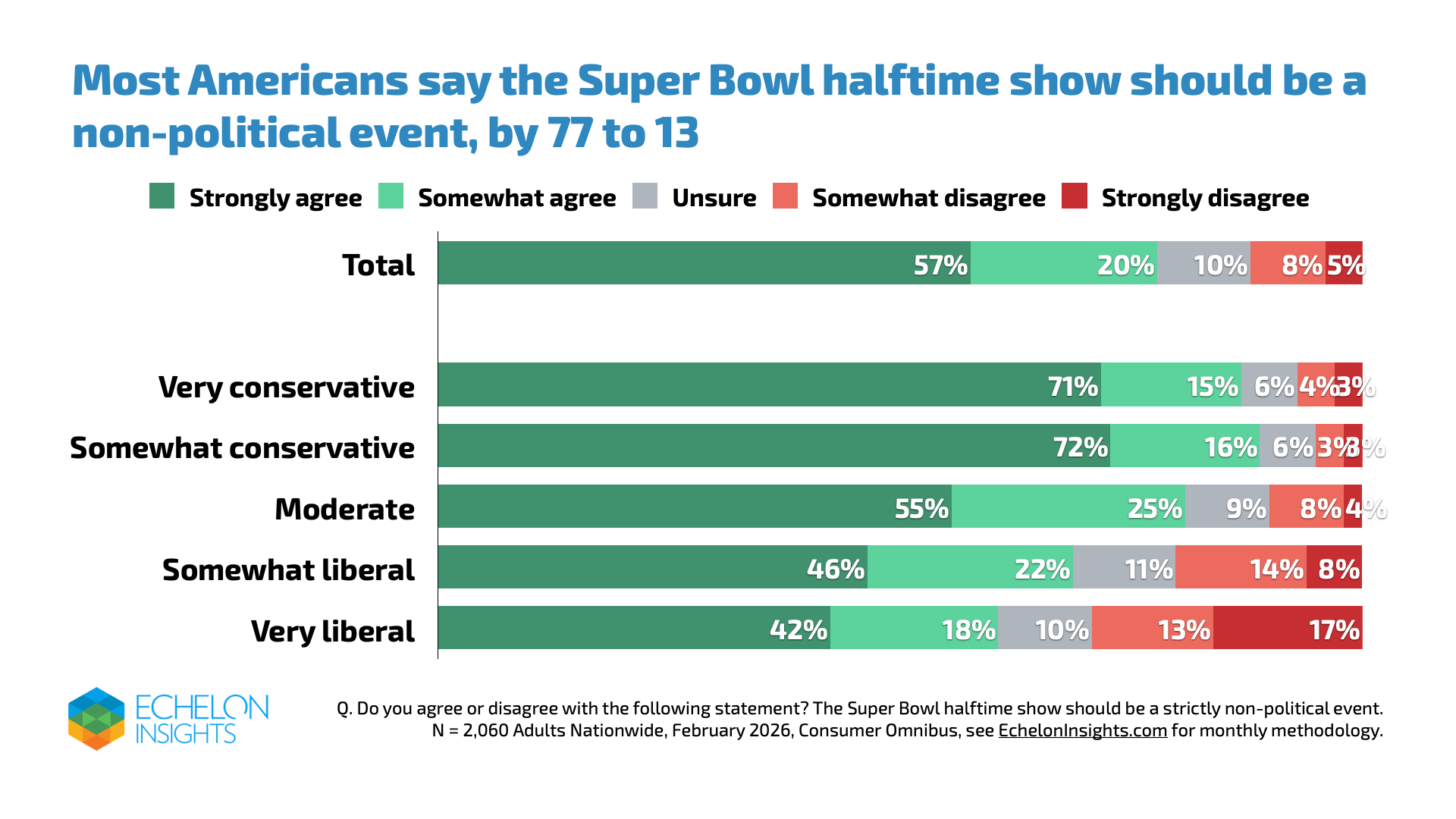
Earlier this week, we put out findings on our Creative Optimizer test for six Big Game ads that played last Sunday. You can find them on our site here. But here’s one slide that didn’t make the deck: Americans of all ideological leanings say the halftime show should be strictly non-political. We’ll have more on our latest consumer omnibus data next week.
4. Gallup is no longer tracking presidential approval, after almost 90 years
Gallup confirmed to the Washington Post on Wednesday that they will no longer be tracking presidential approval, putting an end to their famous polling question going back to the FDR administration. While plenty of other firms can and do ask this question (ahem), nobody has a series going back as far as Gallup.
Their last poll to ask the question found Trump with an approval rating of just 36% in December. But consider the range of approval ratings Gallup reported for earlier presidents. Their poll in June of 1945 found Harry S. Truman held a 87% approval rating with the public. By February of 1952, he was down to just 22%. It’s safe to say a few things have changed since then.
5. Trump’s approval was strongest with immigration last year
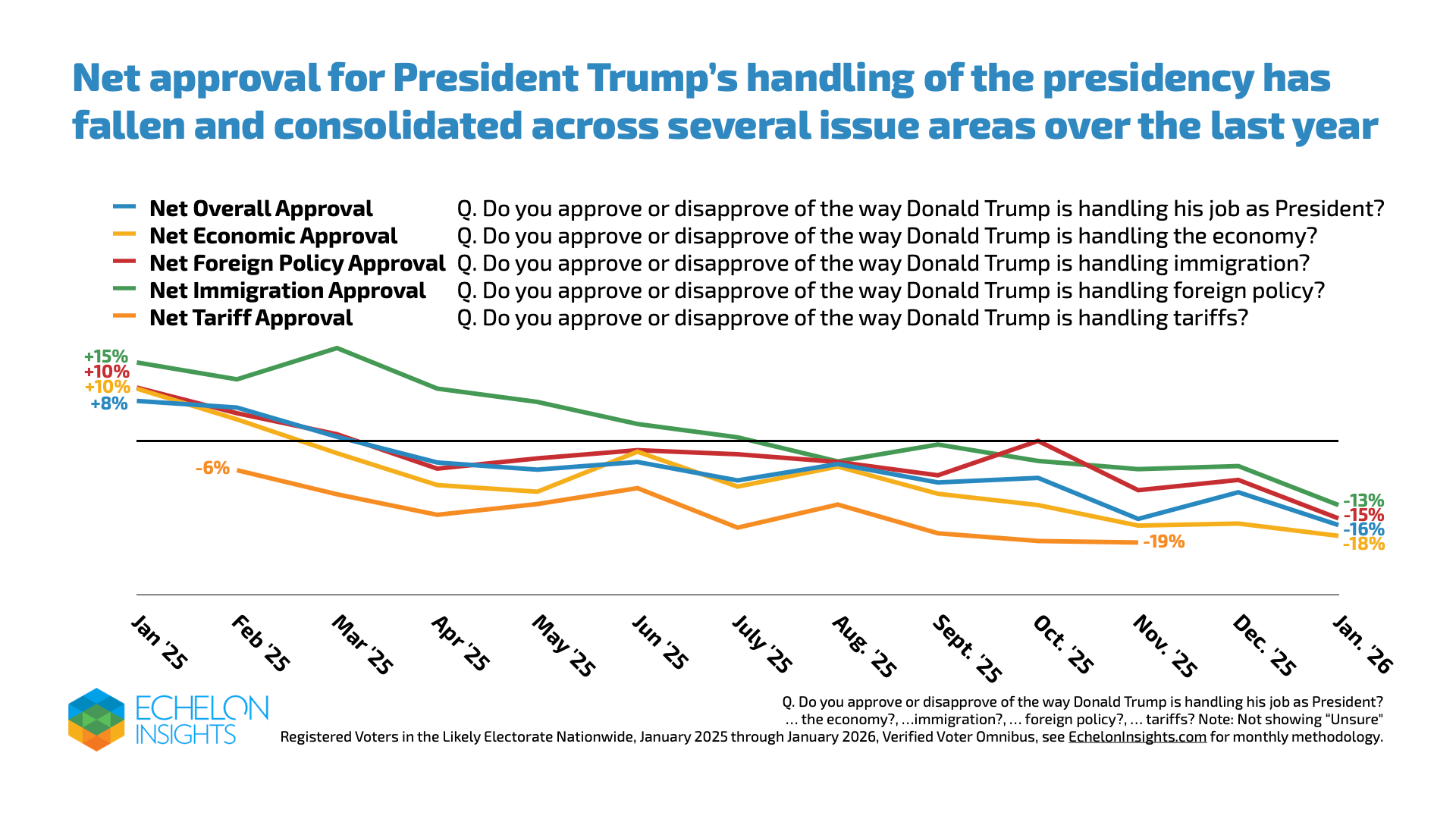
In our monthly voter omnibus, voters used to give Trump a significant approval boost on the immigration issue. His handling of immigration stopped being rated above water in Summer last year, but immigration held above his general approval rating (with one exception in October when his handling of foreign policy rose.) So far, our approval trends suggest a story of consolidation and fall-off as political capital is spent by the administration. Except for tariffs, where voters never quite approved on net of Trump’s handling to begin with.
Stay tuned next week for a more detailed essay on economic sentiment in both our voter and consumer omnibus data. We’ll explore the “vibecession” alongside other public data, and find out how partisanship interacts with Americans’ reported views on the economy and their own economic wellbeing.